
Quantum Foundations: Seb Kot on Homomorphic Encryption and the Future of Health Data
Mar 16, 2026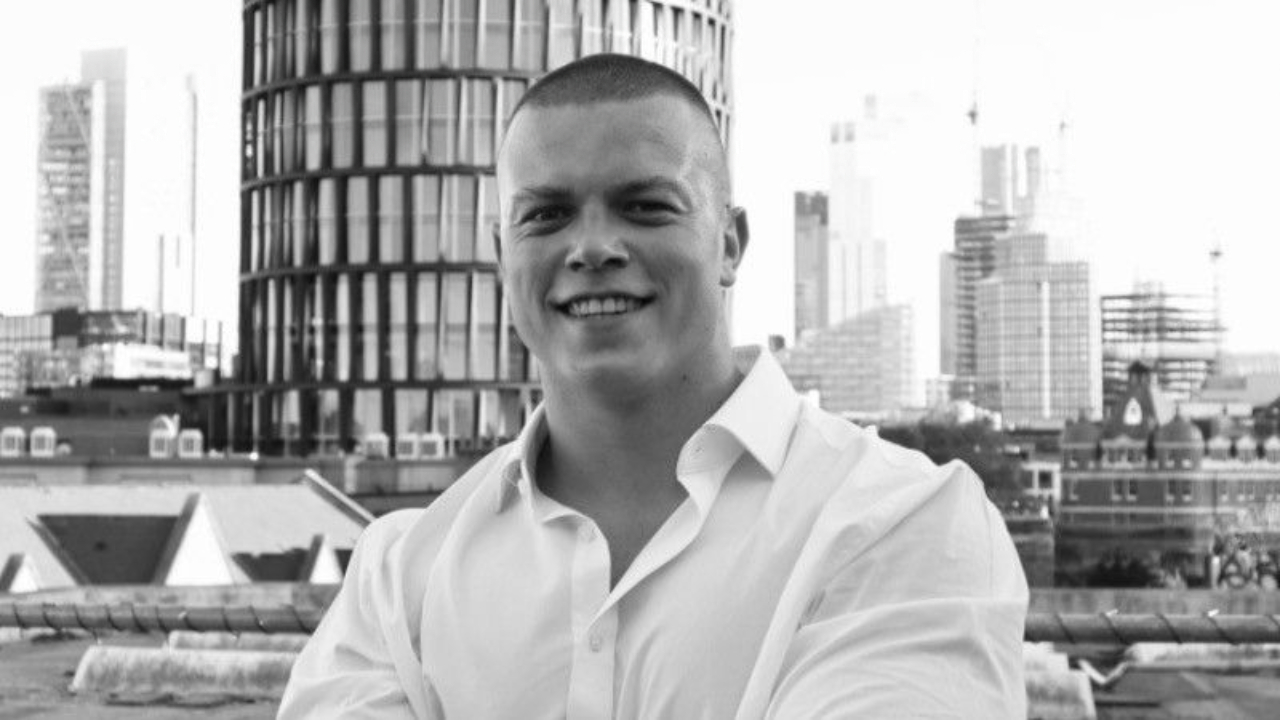
At the start of Demo Night London last week, the room settled into a fireside conversation between Seb Kot, founder and bioengineering student, and Stewart Noakes, Co-Founder of Canopy Community. What followed was a thoughtful discussion about deep tech entrepreneurship, the realities of building in emerging technologies, and the opportunities ahead for founders working at the intersection of quantum computing, cryptography and health data.
For founders and investors in quantum technology, the conversation highlighted an important truth. Many of the most important companies in this space will not emerge from large corporations. They will be built by curious, technically minded founders who are willing to tackle difficult problems early.
Seb is exactly that kind of founder.
His entrepreneurial journey began long before he started working in deep technology. At just sixteen, he launched an events business helping nightclubs recover after the COVID lockdowns. Venues needed revenue, students wanted experiences, and Seb spotted the opportunity to connect the two.
The business worked. But the experience also helped him realise something important.
While the venture generated revenue, it was not the long-term path he wanted to follow. His real passion was mathematics, cryptography and the deeper technical challenges that sit behind secure computing.
That curiosity led him to begin researching encryption models that could transform how sensitive data is analysed. Today he is developing a startup built around homomorphic encryption, one of the most promising technologies emerging from the cryptography and quantum-adjacent research communities.
For investors and founders watching the quantum technology space, homomorphic encryption represents a major breakthrough.
Traditional encryption protects data while it is stored or transmitted. But once that data needs to be analysed, it usually has to be decrypted. That step introduces risk, particularly in sectors like healthcare where privacy is critical.
Homomorphic encryption changes the rules.
It allows computations to be performed directly on encrypted data without ever exposing the underlying information. In simple terms, the data stays private while still being usable.
Seb’s work focuses on applying this model to the health tech industry.
Healthcare systems generate enormous volumes of sensitive patient data. Researchers and clinicians need to analyse that information to improve diagnostics, treatments and public health outcomes. Yet strict privacy regulations and ethical considerations limit how that data can be shared.
Homomorphic encryption offers a powerful solution.
Instead of transferring raw patient data to external researchers or analytics platforms, encrypted datasets can be analysed securely. The results are generated without revealing the underlying personal information. The organisation that owns the data retains full control while still unlocking the insights hidden within it.
For health tech companies, regulators and research institutions, this approach could fundamentally reshape data governance.
It creates a framework where collaboration becomes possible without compromising privacy.
During the fireside chat, Seb spoke openly about the challenge of building a deep tech company at an early stage. One of the biggest obstacles is communication. Technologies like homomorphic encryption are mathematically complex and difficult to explain clearly to investors or customers.
This is where founder development programmes and communities become incredibly valuable.
Within the cohort Seb joined, founders are supported by mentors who help translate complex ideas into clear value propositions. For deep tech entrepreneurs, this is a critical skill. Investors rarely fund mathematics alone. They fund solutions to real problems.
In Seb’s case, the problem is clear.
Healthcare systems need new ways to analyse sensitive data without exposing it. Homomorphic encryption offers exactly that capability.
Another powerful dynamic discussed during the conversation was the role of community. Early-stage founders are often building ideas that sit years ahead of mainstream adoption. That journey can feel isolating without the right peer network.
In environments like the Canopy Community, founders working on very different technologies still support each other. Deep tech founders sit alongside consumer startups, AI builders and platform companies. The cross-pollination of ideas often accelerates progress.
For founders building in quantum-adjacent technologies such as advanced cryptography, these environments are particularly valuable. The work is complex, the timelines are long, and the path to market requires resilience.
But the opportunity is enormous.
Quantum computing will reshape how we think about security, data and computational power. Technologies like homomorphic encryption are part of that transition. They represent the bridge between classical computing, secure analytics and the future quantum landscape.
Seb’s story is still at an early chapter. Like many deep tech founders, he is working through the challenges of translating breakthrough research into a viable company.
Yet the direction of travel is clear.
Healthcare is becoming more data-driven every year. At the same time, privacy expectations are increasing globally. The founders who can reconcile those two forces will build the next generation of health technology infrastructure.
Homomorphic encryption may well become one of the defining tools that makes that future possible.
For investors exploring the quantum and advanced cryptography ecosystem, founders like Seb represent the early signals of where innovation is heading.
And for first-time founders in the room, the lesson was simple.
Start early. Stay curious. Build in the open. And do not be afraid to work on hard problems.
If you would like to connect with Seb and learn more about his work in homomorphic encryption for the health tech industry, reach out to him on LinkedIn https://www.linkedin.com/in/sebastiankot/
Read more about the UniDays Student Startup Accelerator https://startupsmagazine.co.uk/article-student-startup-accelerator-launches-back-uks-next-generation-entrepreneurs