
What 14 Years of SEIS Investing Teaches You About Backing Founders
Sep 11, 2026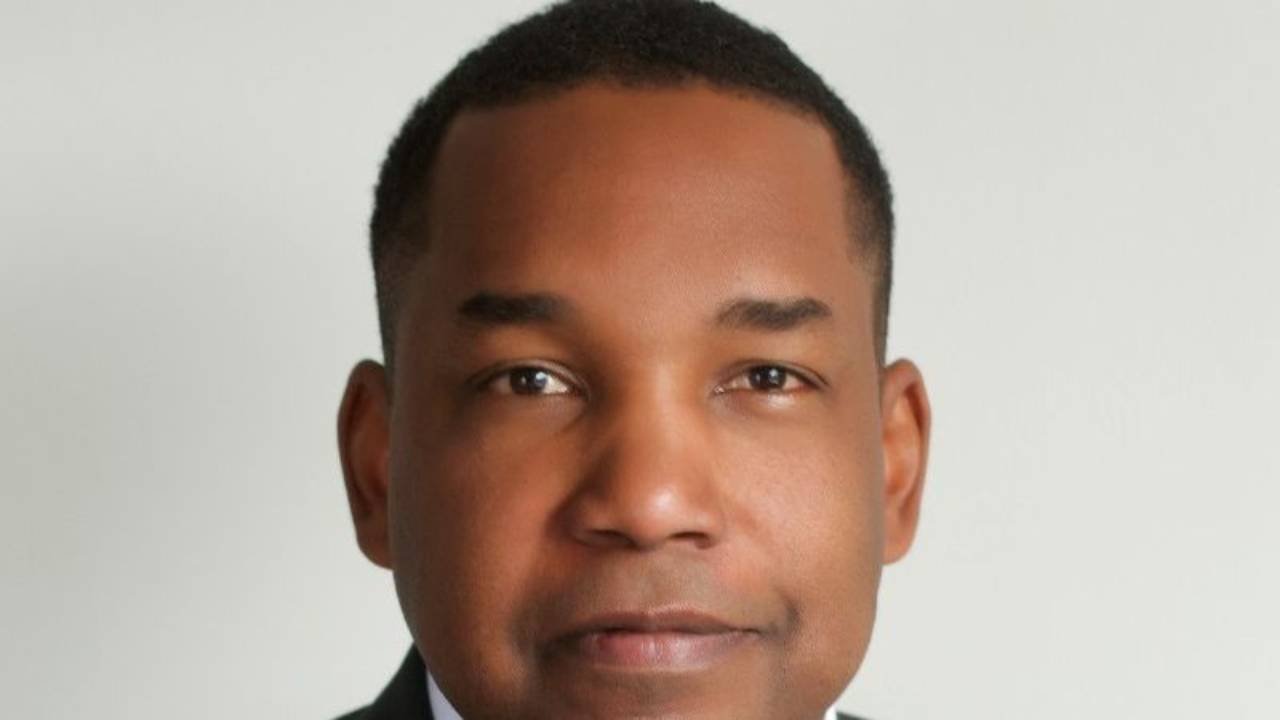
Investor Circle with Jeffrey Faustin of Jenson Ventures
When Jeffrey Faustin joined Jenson Ventures in 2012, he joined as an intern.
The Seed Enterprise Investment Scheme (SEIS) was new. Jenson Ventures was new. Jeffrey recalls joining around transaction number two.
Fourteen years later, he is Managing Partner and CIO. Jenson has invested in more than 160 companies, completed 12 exits and built one of the longest-running SEIS investment track records in the UK.
That gives Jeffrey an unusually long view of what actually matters when investing in early-stage startups.
And for first-time founders preparing to raise investment, one lesson stands above almost everything else:
Learn to listen.
Why investors are really investing in the founder
Jenson is broadly sector agnostic, focusing primarily on technology-enabled businesses while also considering deep tech and consumer opportunities.
Innovation matters. Scale matters. Fast-growing markets matter.
But Jeffrey keeps coming back to people.
At SEIS stage, many startups are pre-revenue. Product-market fit has not been proven. An investor is therefore backing a hypothesis about a market, a product and, critically, the founder's ability to navigate what happens next.
Jeffrey describes one characteristic as particularly important: the ability to listen.
That does not mean simply doing what an investor tells you.
It means listening to customers, evidence and the market — then being willing to adapt.
A founder may believe passionately that she understands the problem. She may have built an MVP and developed a compelling hypothesis about the solution.
But the real validation starts when customers buy it, use it and gain value from it.
The founders who discover that truth fastest are often those who listen best.
Domain expertise gives founders another advantage
The second quality Jeffrey highlights is domain expertise.
Jenson wants to back founders who have lived the problem they are trying to solve.
That experience can give a founder a deeper understanding of the customer and increase her chances of developing the right solution.
For a founder preparing for investment, there is an important question here:
Why are you the right person to solve this problem?
Your answer should go beyond qualifications.
What have you experienced? What have you observed that others haven't? What customer insight do you have? Why have you become convinced that this problem needs solving?
That founder-problem connection can become an important part of your investment story.
SEIS investment is the beginning of a long relationship
Jenson typically expects to hold an investment for five to ten years.
That changes the nature of the founder-investor relationship.
An investment cannot be governed entirely through shareholder agreements, board papers and reporting. Investors and founders need to be able to communicate.
Sometimes that means a formal conversation.
Sometimes it means picking up the phone or sending a WhatsApp message.
Jenson initially took board seats in its early investments. Today, its approach at SEIS stage is generally lighter-touch, including board observer roles and frequent, short check-ins.
With more than 160 companies having passed through the portfolio, Jenson has another valuable resource: experience.
Jeffrey describes being able to recognise the problem a founder is likely to encounter next — and introduce her to another founder who recently solved it.
As he observes, founders will often listen to other founders more readily than they listen to a VC.
That is peer support becoming part of the investment model.
From SEIS to EIS: doubling down on validation
Jenson operates both SEIS and EIS funds.
The relationship between them is particularly interesting for first-time founders.
The SEIS fund takes the earlier product-market-fit risk. The EIS fund can then follow on into companies that demonstrate stronger evidence of traction.
Jeffrey says Jenson has made EIS follow-on investments into 43 companies — roughly the top 25% of its SEIS portfolio.
It is a useful reminder that raising your first investment is not the destination.
Investment gives you resources to test assumptions, find customers, validate the proposition and demonstrate that the business deserves further capital.
Failure is built into early-stage investing
Jenson's SEIS model assumes that only around 40% of portfolio companies will ultimately return value.
In other words, an acceptable failure rate can be around 60%.
That sounds startling until you understand the economics of early-stage investing.
Investors know that some startups will fail.
They are looking for companies with sufficient potential for the successful investments to compensate for those that don't work.
Jenson has completed 12 exits, with its first arriving approximately four years after investment. Jeffrey also notes that COVID significantly disrupted exit momentum, illustrating why investment timescales can stretch well beyond anyone's original plan.
For founders, this is another reason to understand the investor sitting opposite you.
You are entering a relationship that could last for most of the next decade.
The lesson for first-time founders: stay curious
Perhaps the most powerful takeaway from Jeffrey's experience is that investment readiness is not about pretending you have everything figured out.
At pre-seed stage, you almost certainly don't.
Investors know that.
The stronger signal may be showing that you understand what you still need to learn.
Can you listen?
Can you respond to customers?
Can you test an MVP without becoming emotionally attached to your first solution?
Can you use evidence to change direction?
And can you build a productive relationship with investors, mentors and fellow founders who may help you see the next obstacle before you reach it?
After 14 years of SEIS investing, Jeffrey's experience suggests something reassuring for first-time founders:
You don't need to know every answer.
You need to demonstrate that you can keep discovering better ones.
Listen to the full Investor Circle conversation with Jeffrey Faustin to hear more about Jenson Ventures, SEIS investment, portfolio strategy and what more than a decade of backing early-stage founders has taught him.