
From Narrative to Evidence: What Investors Really Need From First-Time Founders
Sep 18, 2026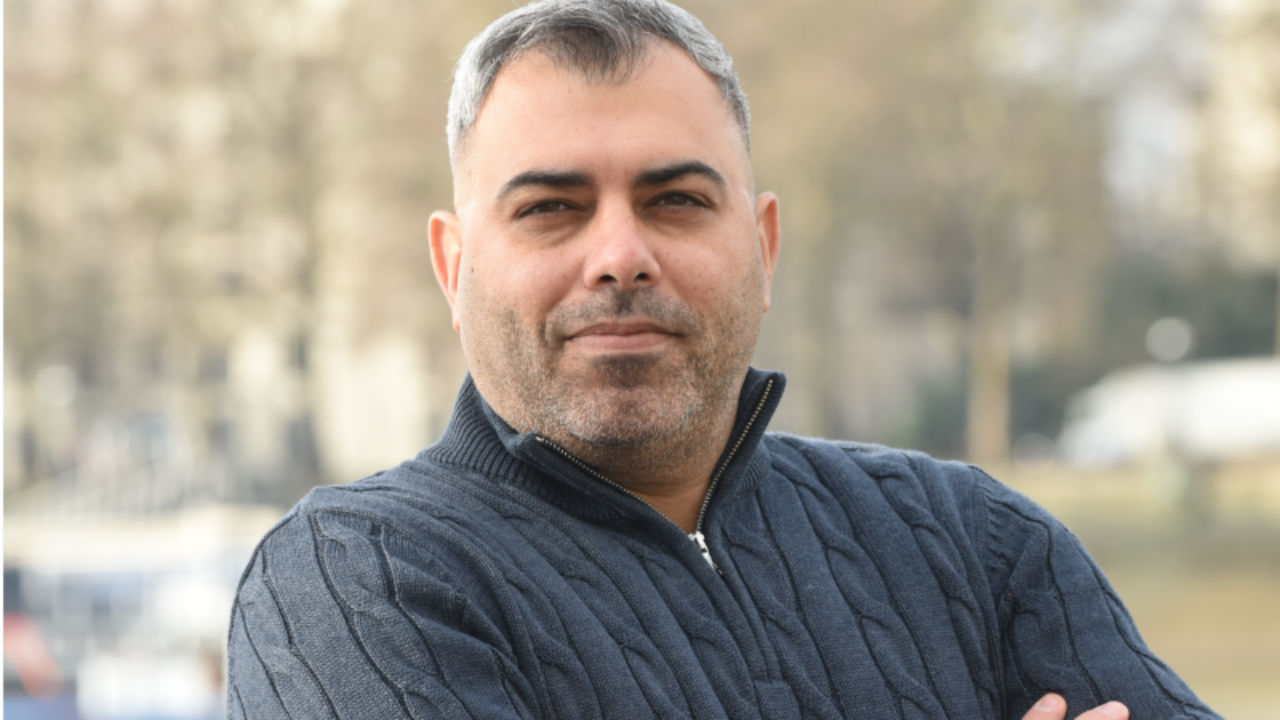
For a first-time founder preparing to raise investment, it is easy to become obsessed with the pitch deck.
Is the design good enough? Is the story compelling? Have we got the market slide right? Can we explain the opportunity in ten slides?
But according to Alaa Amer, Co-Founder and CEO of Equisy, founders should be asking a different question:
Where is the evidence?
In this episode of Investor Circle, Alaa joined Canopy Community’s Stewart Noakes to explore startup fundraising, valuation, investment readiness and what investors actually need when deciding whether to invest.
His central message was clear: founders need to move from narrative to evidence.
A great pitch deck is only the beginning
Alaa brings more than 15 years of experience across finance, investment and startup support. He has helped startups raise more than $20 million and participated in M&A deals worth more than $100 million.
His career began in accounting before progressing to CFO roles and providing CFO support to startups.
That experience exposed a recurring problem.
Many founders, particularly first-time and non-financial founders, struggle to translate an exciting idea into the financial and commercial evidence an investor needs.
The answer is not simply to create a better spreadsheet.
As Alaa puts it, founders need to “let the numbers speak.”
Your financial model should connect to the story you are telling about your startup, customers and market.
Validation comes before investment
Perhaps the most useful advice from Alaa comes at the end of our conversation.
Before contacting investors, validate your assumptions.
Founders naturally start with assumptions. You believe a customer has a problem. You believe your solution can solve it. You believe people will pay. You believe the market could become large enough to build a significant company.
Investment readiness means gradually replacing those assumptions with evidence.
That principle influenced the development of Equisy itself.
Alaa and his co-founder conducted customer discovery with more than 1,000 founders, investors and accelerators while developing the platform.
The objective was to understand genuine operational pain points rather than build around assumptions.
That is an important lesson for any founder developing an MVP: customer validation is not something you do after building. It should shape what you build.
Evidence doesn't always mean revenue
This distinction is particularly important for early-stage startups.
Investors would love to see revenue, growing customers and strong retention. But a startup raising its first investment may not have all of those things yet.
That does not mean it has no evidence.
Evidence could include customer interviews, MVP testing, letters of intent, early adoption, a growing waitlist or clear proof that an important problem exists.
A founder might also demonstrate that a problem that is relatively small today is likely to become significantly larger.
The question becomes:
What can you prove today that makes your story about tomorrow more credible?
What is your startup actually worth?
Valuation creates another challenge for first-time founders.
Alaa describes startup valuation as subjective because ultimately it becomes part of the conversation between founder and investor.
But subjective does not mean arbitrary.
Equisy supports founders using different valuation methodologies, including businesses that are pre-product or pre-revenue.
The purpose is not to dictate a definitive valuation. It is to educate founders and provide evidence that can inform their investment negotiations.
Understanding why your company might be worth £1 million, £2 million or £5 million is far more useful than simply deciding what percentage you would like to give away.
Making fundraising more systematic
At Canopy Community, this is one reason we are adopting Equisy across future founder programmes.
We work extensively with first-time founders.
The challenge with doing something for the first time is obvious: you have never done it before.
Experienced founders bring pattern recognition from previous fundraising rounds, investor conversations and mistakes.
First-time founders don't have that advantage.
Platforms, accelerators, mentors and founder communities can help embed some of that accumulated knowledge into the fundraising process.
This matters particularly within the UK SEIS ecosystem, where Canopy wants more founders to have a credible opportunity to secure their first investment.
Fundraising should not depend entirely on whether a founder already understands the system or happens to know the right investors.
Investors have a filtering problem too
There is another side to the fundraising equation.
Investors have limited time.
They might see hundreds or thousands of opportunities while only being able to make a handful of investments.
The objective should therefore not be to make investors process more pitch decks. It should be to help them identify the most relevant opportunities faster.
Alaa describes Equisy as a connected evidence workflow across founders, accelerators and investors.
The aim is not to replace investor judgement.
It is to structure information, improve screening and make due diligence more efficient so investors can spend quality time with the startups they could genuinely back.
Stop counting investors. Start building evidence.
Perhaps the biggest mindset shift for a first-time founder is to stop measuring fundraising progress by the number of investors contacted.
Sending your deck to 500 investors does not necessarily make you more investment ready.
Instead, ask yourself:
Have we validated the problem?
Do we understand our customers?
Can we demonstrate traction or another meaningful form of validation?
Can we explain our financial model?
Can we justify our valuation?
Is our cap table ready?
Can an investor quickly understand the evidence supporting our story?
Because investment is not ultimately about having the most beautiful narrative.
It is about giving an investor enough evidence to believe that narrative could become reality.
Connect with Alaa Amer on LinkedIn to follow his work with Equisy and his insights into startup fundraising and investment readiness.
Follow Investor Circle for more conversations exploring how investors make decisions, what makes founders investable and how first-time founders can give themselves the best possible chance of raising their first investment.